
Guides · What to see from the sea

What to see in the Aeolian Islands from the sea: coves, caves and volcanoes

From land the Aeolians are one island at a time. From the sea they become an archipelago: coves with no road, caves, sea stacks and a volcano wall that runs down into the water, glowing. Here is what you can only reach by boat, and how to respect it.

In short: from the sea you reach the coves with no road, such as the white beaches of Lipari below the old pumice quarries, Pollara on Salina in its open crater, Gelso on Vulcano and Cala Junco on Panarea. Then the caves and sea stacks, the rock pillars rising out of the water, and the Sciara del Fuoco of Stromboli, which at night you can only watch from the sea. All inside a protected area, with rules of respect worth knowing beforehand.

The most beautiful things in the Aeolians do not have a car park: they have a bay where you drop anchor. The guidance on respect you find here comes from the archipelago's status as a protected area and from local ordinances, which remain the official reference.

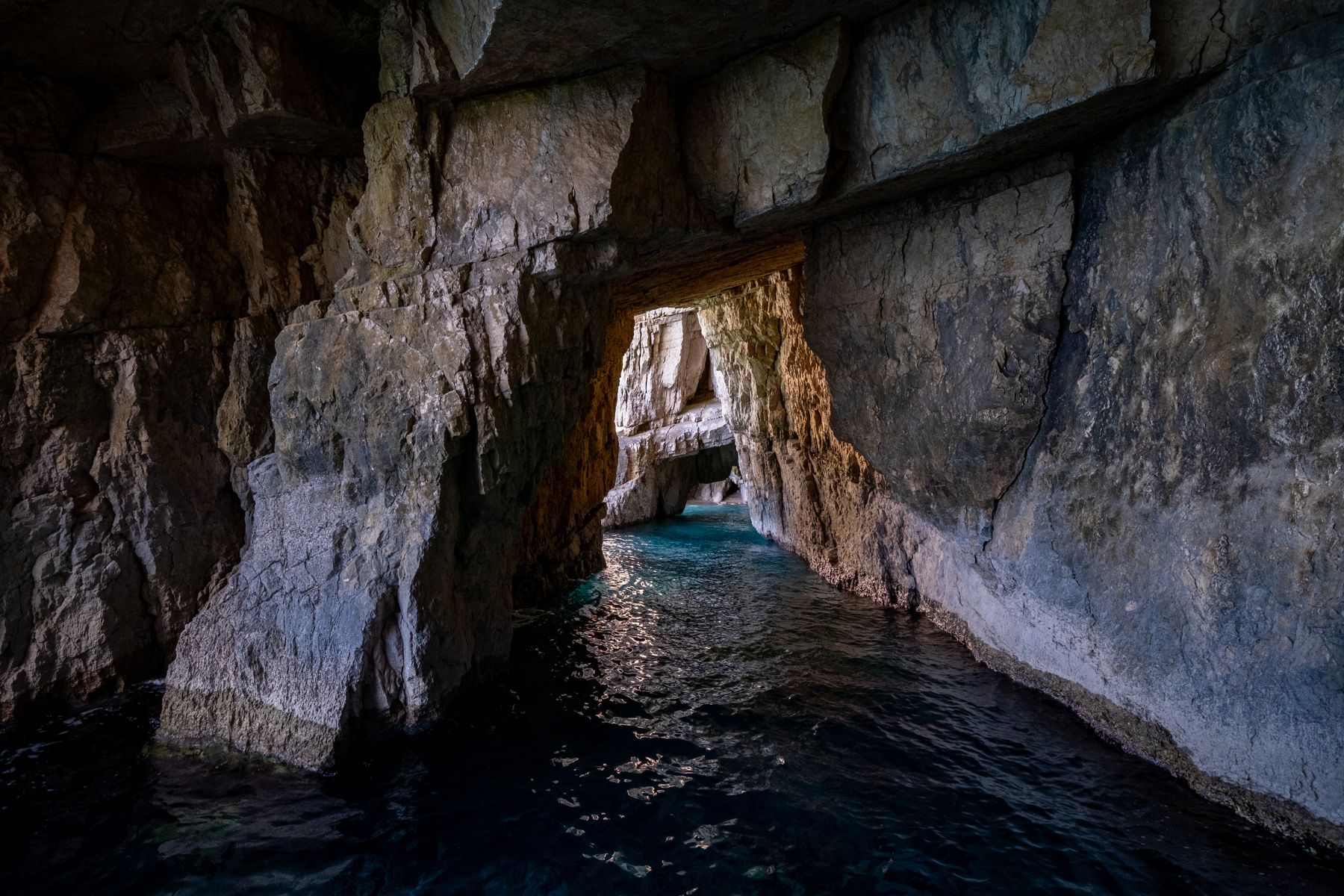
The inside of a sea cave with light reflecting on the clear water
A sea cave

The coves you can only reach by boat

Four well-known landing spots, one per island, that change completely from the sea.

Lipari

The white beaches below the quarries

On the north side of Lipari the water turns an unnaturally pale blue: it is the reflection of white pumice on the seabed, the legacy of the old quarries that once ran down to the sea here. From land they are awkward to reach; from the sea they are a natural stop, with shallow, clear water ideal for a swim.
Salina

Pollara, in the crater open to the sea

Pollara is a crescent of beach inside an ancient crater that the sea has eroded on one side. Above, the rock wall; ahead, the open horizon toward Filicudi and Alicudi. It is one of the archipelago's most recognisable views, and from the water you take in its whole bowl shape, impossible to see from land.

Vulcano

Gelso, to the south, sheltered from the maestrale

At the southern tip of Vulcano, Gelso is a small seaside hamlet with a lighthouse and secluded beaches, sheltered from the maestrale that blows from the west. It is one of the calmest spots to end the day, with still water and the sunset over the archipelago behind you.

Panarea

Cala Junco, a natural pool

Cala Junco is an inlet closed in by rock walls, with still, emerald-coloured water: a natural pool that only opens up to those arriving from the water. It is one of the most photographed spots on Panarea, and one of the hardest to picture without seeing it from the boat.

Caves and sea stacks: the rock that rises from the water

Between one island and the next, the Aeolian sea is dotted with sea stacks, the rock pillars left standing while the rest wore away. The best known are north of Panarea, the islets of Basiluzzo, Lisca Bianca and Dattilo, which trace a small archipelago within the archipelago. On Vulcano, the Faraglione di Levante marks the entrance to the harbour.

Along the steeper coastlines, caves and natural arches carved by the surf open up: recesses where the water changes colour with the time of day and the light, and which you skirt slowly, never entering when the sea is rough. These are the points where a day at sea stops being a crossing and becomes exploration.

How to approach them. Sea stacks and caves are approached at idle speed and with attention to shallow seabeds. The rock walls can hide reefs close to the surface: keep clear when you do not know the spot, and with a skipper you rely on their reading of the coast.

The Sciara del Fuoco of Stromboli, from the sea

The Sciara del Fuoco is the great wall that runs down from Stromboli's crater to the sea, the channel down which the material from the explosions rolls. By day it is a dark scar on the island's flank; by night it becomes the show, with red flashes running down toward the water at regular intervals.

The best vantage point is the water in front of the Sciara, on the island's north-west side: from land the view is partial, from the boat you take in the whole wall. It is the image that those who return to the Aeolians go looking for on purpose, and the reason the evening trip to Stromboli is the most requested of the summer.

With a skipper, at a distance. Watching the Sciara from the sea always happens with boats run by a skipper and within the safety distances set by ordinance, which vary with the volcano's level of activity. It is not an outing you do on your own: you choose the boat with a skipper.

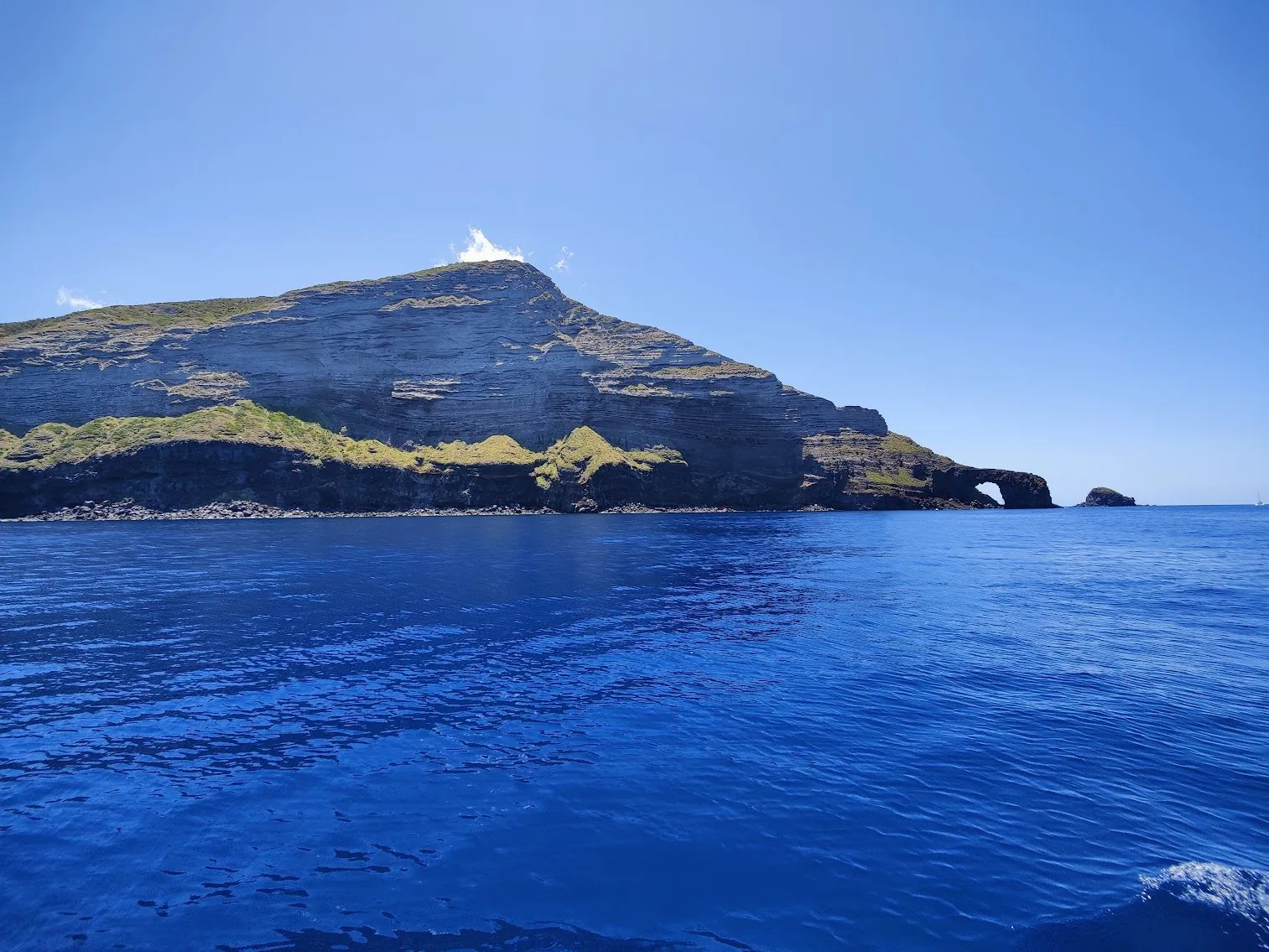
The headland with the natural arch at its base, one of the stops of the boat tour among the Aeolians
A volcanic island from the sea

A protected archipelago

The Aeolian Islands are an area of great environmental value, a UNESCO World Heritage site, and some zones are subject to protection and specific ordinances. Sailing around them by boat also means respecting them: here are the principles that always apply.

The detailed rules (protected zones, mooring fields, ordinances on navigation and on distances from Stromboli) are published by the relevant Coast Guard authority and by the island municipalities, and should be checked for the period of your trip. This guide sets out the principles, it does not replace the ordinance in force.

You know what to see, next is how to get there. For routes that combine these spots into a single day, the boat itineraries. To find out when the sea makes them reachable, the best time in when to go.

The next step

You know what you want to see, we tell you which boat

Tell us which coves you want to reach, the date and how many of you there are: we will put forward the best options, with or without a skipper depending on the route, no strings attached.

Get a free quote
Get a free quote